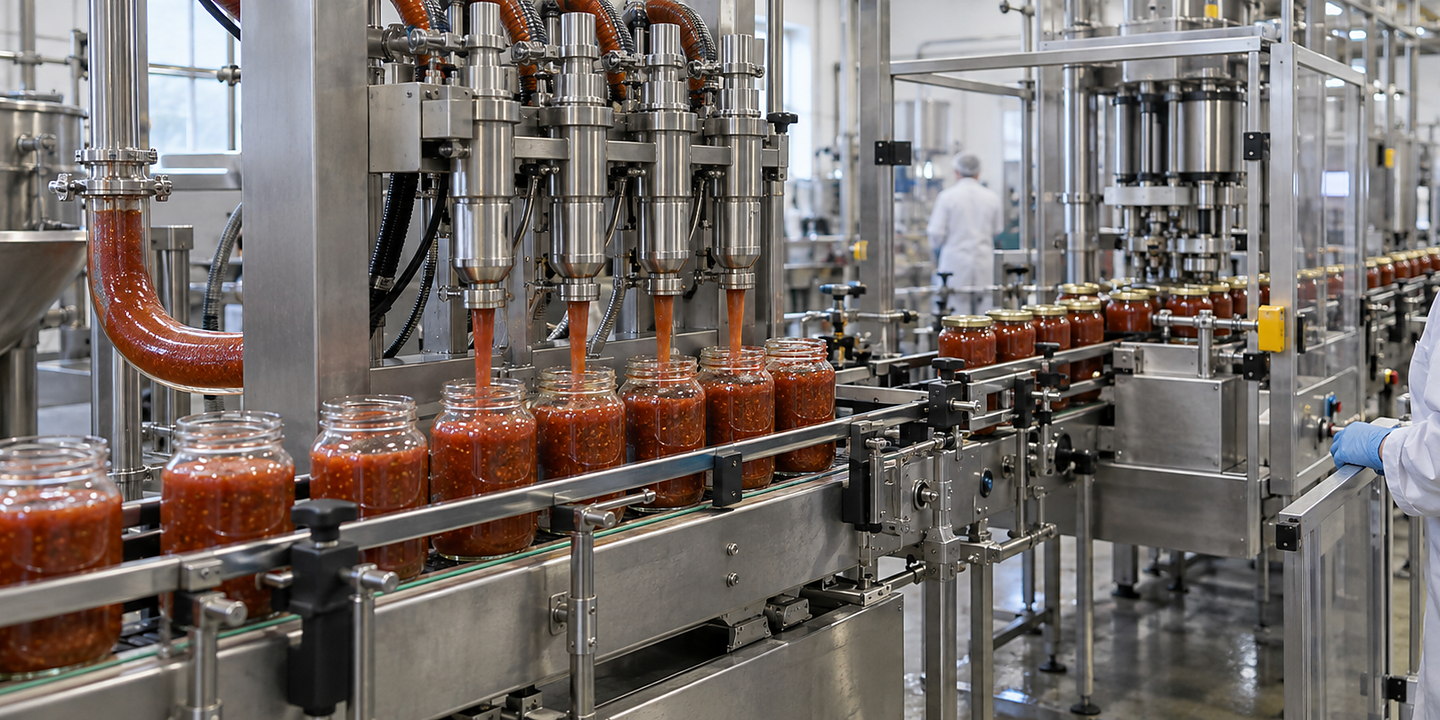
Plan pet-food packing interfaces for product supply, pack handling, dosing, closing, recipes, faults, result records and accepted-pack discharge.
In brief
Define the boundary between pet-food supply, pack presentation, dosing, closing and downstream checks. Agree product and pack references, ready/fault signals, recipe ownership and how an unacceptable or unconfirmed pack is held or removed.
Use the packing sequence to assign interface responsibilities. Keep product-process, hygiene and shelf-life decisions with the responsible team; a filler or closing-machine interface does not establish those outcomes. Include access for the approved cleaning and recovery work.
On the production floor
Connect equipment, controls and people into one reliable process — Pet Food Packing Machines
Plan pet food packing machines around your product, pack range, target output, cleaning needs and finished-pack checks. Discuss a practical line concept with Lancing using representative samples. Your integration review should connect target dose, count or pack weight, required output and production pattern and the people who run the process.
Six areas to coordinate for pet food packing machines
Mechanical
Define product supply, bag/pouch opening or rigid-pack support, dosing entry and discharge transfers using the identified packaging range. Agree installation boundaries and access for the approved inspection, cleaning and maintenance tasks.
Electrical
For Pet Food Packing Machines, list the supplies, isolation, protective devices, panels and cable routes required by the proposed installation.
Controls
Agree ready, running, stop and fault signals between product supply, pack handling, dosing and closing. Assign recipe/format ownership and the response to missing packs, interrupted supply, closing faults and controlled recovery.
Safety
Review risk controls, stop behaviour, access, reset and the checks needed around required output and production pattern.
Data
Define which recipe, batch or pack identity is linked to fill, code or inspection results where those systems are included. Agree missing-result handling, retention, correction and who confirms the pack’s accepted or held status.
Your team
Assign product and packaging replenishment, line clearance, approved cleaning, first-pack release and recovery responsibilities. Include normal interventions and changeover observations in the production trial record.
How the work comes together
Plan fault recovery for routine production using dry and wet pet-food packaging as carefully as normal running
For Pet Food Packing Machines, your team can review each stage before the complete installation is put into routine use.
01
Review Representative Product and Pack Samples
Share representative product and pack samples, including the normal range for dry & wet pet-food packaging product behaviour and the difficult container, bag or pack range cases.
02
Trial the Dosing, Handling or Closing Method
Compare suitable methods and use focused trials to show how each option performs against target dose, count or pack weight.
03
Integrate Infeed, Discharge, Controls and Access
Connect the equipment to your line, services and controls while resolving required output and production pattern for day-to-day operation.
04
Run Agreed Production and Changeover Checks
Confirm cleaning, access and changeover method, then complete and record finished-pack checks and reject handling before your operating team takes over.
For your application: check target dose, count or pack weight, required output and production pattern, cleaning, access and changeover method, and finished-pack checks and reject handling as part of the complete line trial.
Important limits
Line connections can change the approach for Pet Food Packing Machines
Food-contact, hygiene and allergen controls must be validated for the actual product and site.
The selected method must be trialled with representative product and packaging.
Supplier tolerances and product-condition changes can alter handling or fill behaviour.